Showing posts with label Ireland. Show all posts

Monday, 12 February 2018

Index of Power


The following chart gives a snapshot of the top 20 countries, ranked by their index of power in the world economy. Readers of this blog or my book, The City, will have seen this concept before,[1] but here the information is updated to 2016-17.

Index of Power, 2016-17

Notes: The height of each bar is given by the country’s total index value, which is then broken down into the respective components. Countries are identified by their two-letter ISO code. Take care, because CH is Switzerland, not China (which is CN), and DE is Germany.
The overall picture shows a small number of countries, led by the US, towering over the rest. Only 33 countries out of 180 have an index that is more than 1% of the US index number! In a chart, most of the columns would look like the x-axis, so here I have shown just the top 20 countries. Of those, only five are close to or above 20% of the US number: the UK, China, Japan, France and Germany.

The UK remains number 2 on these updated figures. But its index value has slipped back in the past few years on most measures, and likely will slip further in future with the impact of Brexit. China stays number 3, but has come in closer, helped by its GDP growth, a greater use of its currency in world markets and by the size of its foreign direct investment assets (FDI).[2] France has edged a little above Germany in the latest ranking, helped by the better relative position of banks in France.
I have excluded from the chart several countries whose ranking is boosted artificially, namely in ways that do not reflect its power. For example, in the latest data the Cayman Islands stood out as an international banking centre and a home of foreign direct investment. But the banks and the assets have little to do with citizens of the Caymans. Ireland and the British Virgin Islands are excluded for similar reasons relating to FDI.

Statistical details

Roughly 180 countries have been taken into account for this ranking. Depending on the statistical measure used, data are available only for 40 to 150 or so.
My five measures are:
- Nominal GDP (2017 estimates, IMF)
- Foreign Direct Investment stock outstanding (at end-2016, UNCTAD)
- Outstanding cross-border lending and borrowing by banks (September 2017, BIS)
- The use of a country’s currency in international markets (April 2016, BIS)
- A country’s military expenditure (2016, SIPRI)
If a country is top in all categories, eg it has the biggest GDP, the biggest military spending, and so forth, then it would have an index number of 100.0. If another country had a GDP half the size of the biggest one, then its number on this measure would be 50; if its FDI were only one-quarter of the biggest country (not necessarily the same country), then its number would be 25; if it had the biggest international bank lending and borrowing, then its number would be 100. Taking each of its five individual measures and dividing by 5 would give the final index number for that country’s power rank. The measures have equal weights.

So what?

The idea behind this chart is to present key features of the world economy in a summary way. At the very least, it gives the lie to the absurd notion that there is an ‘international community’ and instead makes one focus on global power relationships. Each of the measures has limitations, discussed elsewhere, as is true for any set of data. But the evolution of the chart is also useful for tracking how the relative strengths of the major powers change over time.

Tony Norfield, 12 February 2018


[1] See here for one of the early versions, and Chapter 5, ‘The World Hierarchy’, of The City: London and the Global Power of Finance, Verso 2016 and 2017, for a fuller explanation.
[2] Data for Hong Kong and China should be combined, since they are one country. However, there are difficulties. For example, this can easily be done for GDP, but in the case of FDI, most of Hong Kong’s is in China. So I have included only China’s FDI (most of which I believe is outside Hong Kong). In the China data shown, I have added Hong Kong only for GDP and FX. Banking is taken as the average of the two; FDI and military spending is China only. The resulting index number will probably slightly understate China’s importance.

Sunday, 4 February 2018

The Long Arm of the Law No More


By Susil Gupta
The recent appeal case of Mr Thomas O’Connor highlights some of the pitfalls of the British strategy – one has to call it something – of having its cake and eating it in its future relations with the European Union. The case concerns the European Arrest Warrant (EAW) regime and nicely illustrates how law binds European nations together and why British cherry-picking isn’t possible.


Since its introduction in 2002, EAWs have has made a major contribution to law enforcement. Under the scheme, about 5000 people are extradited every year in relation to often serious charges.
Much confusion about the European Arrest Warrant regime arises from the fact that it is often considered an extradition procedure when it is actually designed not to be an extradition procedure.
In international law an extradition procedure is a request from one sovereign State to another sovereign State, both having different jurisdictions. Such a request normally has two stages. A judicial stage where a court considers the legal merit of the received request. If all is in order, and the court approves the request, it is passed on to the executive for final approval. This is always a cumbersome and expensive procedure and may result in frustrating the aims of justice in a requesting country as trials can be held up for years and witnesses and evidence go astray.
The EAW scheme is designed to do away with all this. Courts have only limited powers to review a request, and there is no executive phase. The key element of the scheme is the concept of a ‘common jurisdiction’, that is, all courts within the scheme have sufficiently similar legal regimes to allow the EU to create, by law, a common jurisdiction. The request to ‘extradite’ is simply a request from one court to another.
As is obvious, an assumed ‘common jurisdiction’ can only operate within European Law and has the European Court of Justice (Luxembourg) as its appellate court. A state that leaves the jurisdiction of the European Court, leaves the ‘common jurisdiction’ that is the basis of the EAW scheme.

The facts of the case

Thomas O’Connor, 51, a building company director, was convicted of tax fraud in 2007 in the UK. While on bail, he absconded to Ireland. The UK courts issued an EAW and O’Connor was duly arrested by the Irish police. At first instance, a Dublin court granted the EAW request. O’Connor appealed against the court order and eventually his case came before Ireland’s Supreme Court. The Supreme Court allowed the appeal, arguing that, were the extradition granted, O’Connor would still be serving his sentence while the UK would have withdrawn from the jurisdiction of the European Court of Justice, in effect delivering O’Connor to a country outside the EAW jurisdiction and possibly robbing him of recourse to the European Court.
The Irish Court also referred the case to Luxemburg since the issues raised have wider implications and it will have the final say on the mater. However, given the clear-cut nature of the main issue, it is likely that other EU nations will follow the reasoning of the Irish court.

Whitehall cock-up

Britain is very keen to retain the EAW regime and declared its intention to stay with the scheme within weeks of the Brexit referendum in 2016.
Many of its criminals have a tendency to flee its jurisdiction, often for sunnier climes on the south coast of Spain. It is also a cheap and efficient way to get rid of criminal foreign nationals. Brexiters tend also to be hard on crime so no political price to be paid for “remaining in Europe” on this issue.
Didn’t anyone in government realise that withdrawing from European law and its judicial structures might pose a serious problem and strike at the legal foundations of European cross-border law enforcement? Apparently not, amazing as it may seem for a country that prides itself on the rule of law and judicial oversight!
In March last year, Home Secretary Amber Rudd told Parliament that she ruled out any possibility of Britain leaving the EAW mechanism describing it as “an effective tool and that is absolutely essential to delivering effective judgment to the murderers, rapists and paedophiles.” But Lord Paddick, once a high-ranking officer in the Metropolitan Police, was quick to point out the obvious “The Government has to explain how this can be done without European Court of Justice oversight and common data standards.”
As late as September 2017 the UK issued a policy paper – Security, law enforcement and criminal justice: a future partnership paper – that made a strong commitment to remaining within the structures of European law enforcement including, Europol’s 2017 Serious and Organised Crime Threat Assessment, Passenger Name Records (PNR) data collection, the Schengen Information System Alert system, Europol´s Internet Referral Unit (IRU), Serious and Organised Crime Threat Assessment, the Joint Cybercrime Action Taskforce, PrĂ¼m (a system for rapid law enforcement information exchange on fingerprints, DNA and Vehicle Registration Data), Eurodac (a mechanism for sharing fingerprint data for asylum and law enforcement purposes), etc. The 20-page paper firmly asserts that law enforcement after Brexit it will be “business as usual” – but fails to consider any legal issue. Within two months of the paper’s publication, the Irish Times was reporting that EAW cases at the Irish Courts might face problems.
As a consequence, the Irish Court’s ruling has serious implications for crime in the UK. The internet and cross-border economic activities allow criminals to commit offences in the UK from the safety of a number of European countries beyond the reach of the British police. Likewise, any British criminal who does not fancy facing serving a hefty sentence is now only a plane or train ticket away from freedom. Why should any European police force spend valuable resources monitoring and tracking British criminals abroad if they cannot be extradited? Many other law enforcement facilities and activities are likely to be affected because all of them are subject to the legal oversight of European law and its judicial institutions.
So, soon it will no longer be true that Scotland Yard always gets its man.

4 February 2018

Saturday, 23 December 2017

Some Books #2


These are some of the better books I have read in the past year, and ones to look for if you want to find out about …

The British Labour Movement and Ireland

Geoffrey Bell, Hesitant Comrades: The Irish Revolution and the British Labour Movement, Pluto Press, 2016
This book is an interesting study that undermines the notion that the British labour movement was ever progressive when faced with a challenge to British imperialism. Its focus is on Britain and Ireland in the early 20th century, and it shows there was only some limited support for Irish freedom from British rule in British cities where there were many Irish workers. Neither the mainstream workers’ organisations, nor the more radical ones, took up the issue in any substantial way. This leads Bell to his book’s title of ‘hesitant comrades’. The Catholic Herald summed it all up in March 1920: ‘Ireland is in the throes of a national agony, a victim of merciless militarism, and British Labour remains quiescent and inactive’ (p. 218).
William O’Brien of the Irish TUC and Labour Party had made a similar point a year after the 1916 Easter Rising. Addressing delegates at the Leeds Convention in 1917, he said: ‘In Ireland you have a small nationality at your door which is demanding the right of its own life, … I gather from reading some of the capitalist papers that revolution is popular nowadays. Twelve months ago you had a revolution in Ireland. The papers and politicians that acclaimed the revolution in Russia did not acclaim the revolution in Ireland whose leaders were taken out and shot like dogs’ (pp. 217-218).
Even Sylvia Pankhurst’s Workers’ Dreadnought sidelined the issue of Irish freedom from political oppression by belittling the Sinn Fein-supporting nationalists. It promoted hopes for the class struggle instead. It is tricky to follow the development of inconsistent comments by labour movement radicals. But while some, like the Communist Party of Great Britain (CPGB), ended up being more ‘theoretically’ correct, they still did next to nothing about the issue, or even wrote much about it.
All the workers’ organisations wanted to avoid the question of sectarianism in Ulster, which was replicated in the working class in Liverpool, Glasgow and elsewhere. Confronting sectarianism would also have caused problems for the trade unions. So they blamed sectarianism on Unionist politicians, like Carson, and on the British Government, and downplayed the material basis for the support of anti-Catholic policies among the Protestant-Loyalist working class.
In the second half of 1921, after anti-Catholic pogroms by the Ulster Loyalists, CPGB member William Paul, in his pamphlet Irish Crisis, said: ‘The peculiar psychology of Orangeism … with its fierce and violent hatred against its enemies will be easily diverted against a capitalist class during a revolutionary crisis. It was Carson who taught them how to arm against the status quo … When the workers move against Capitalism, the revolutionary movement of Ulster will have good reason for thanking Carson for his magnificent work’ (p. 191). This view rested on the delusion that somehow the loyalist workers’ ‘fierce and violent hatred’ towards Catholics would be overcome in a ‘move against Capitalism’. It dishonestly used the mirage of future workers’ unity to avoid dealing with the ugly reality of the day.
The left sometimes recognised how Ireland’s struggle was a political embarrassment. For example, in June 1920 the British Communist paper, The Call, said: “The suppression of Ireland is one of the world’s great crimes; the silence of Englishmen is one of the tragedies” (p. 111). But despite this, and other, similar statements by the CPGB in 1920-21, they did little about it. To say the least, they would have scored few points when measured on the Bolshevik reckoning of how many Communist supporters had been imprisoned for their agitation on Ireland.


The British and India

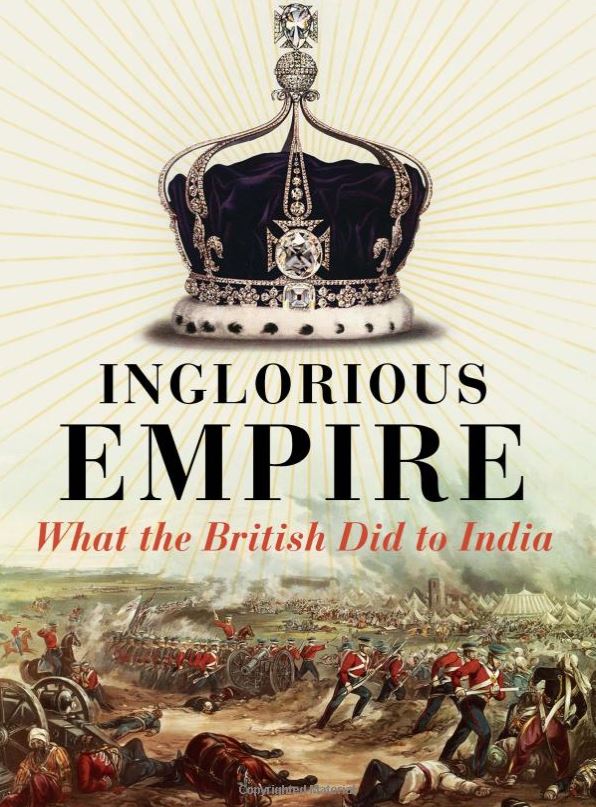
Shashi Tharoor, Inglorious Empire: What the British Did to India, Hurst & Co, 2017
Tharoor is an Indian politician, and a good polemicist. Two points stood out for me in this well-written book. Firstly, he does a good job of confronting Niall Ferguson, the historian and apologist for British (and American) imperialism, on the subject of India. This illustrates how a polemic can provide a useful theme for guiding the exposition of an argument.
Secondly, and for me the most interesting parts of the book, were not where he detailed how the British destroyed the Indian textile industry to promote India’s imports of British textile products – often woollen clothes that were completely unsuited to India’s climate. This has been covered many times by others. The new point for me was where he showed how British domination undermined India’s commercial shipping sector and its shipbuilding industry, an industry that, at the time, was at least as advanced as the British one. This resulted from British commercial power, setting the rules on what ships could be used between British controlled ports and also who could run that business. Commercial power is often greatly underestimated by those who focus only on industry, and these examples help explain more fully Britain’s exploitation of India.


Machinations in the Middle East

Christopher Davidson, Shadow Wars: The Secret Struggle for the Middle East, One World, 2016
This book is a good, easy to read, although lengthy review of events in the Middle East and Northern Africa. It will help a lot in understanding the background to present day news stories, since it details the actions both of the major powers – the US, Britain and France in particular – and of the different political groupings in the region. There is a welcome coverage of countries from Nigeria, to Libya, to Saudi Arabia, Syria and Turkey, with comprehensive information on the supporters of ISIS, Al-Qaeda, Al-Nusra, Boko Haram, etc.
Davidson has incorporated a mass of material into the book, providing some important details that even close observers of these events are likely to have missed. His 2,500 footnotes are encyclopedic, even to excess, covering 121 of the near-700 pages, but they do give useful documentation for anyone doing research on these issues. However, although in many places the book gives a useful summary of the relevant historical background, its disadvantage is that it reads more like an extended news review. This is at the cost of giving a more theoretical assessment of what is going on and explaining how this results from the latest phase of imperial disintegration.


The Balfour Declaration, British Support for Zionism

David Cronin, Balfour’s Shadow: A Century of British Support for Zionism and Israel, Pluto Press, 2017
This book does what it says in the title, and reviews British government policy towards Palestine and Zionism from the time of the Balfour Declaration in 1917 up to the present day. There are more twists and turns in this story than it is easy to summarise here, but I would recommend Cronin’s work as well-written, well-documented and mercifully concise!
Although it covers some similar ground, I would also recommend reading John Newsinger’s telling critique of the British Labour Party and Zionism, available here.

Tony Norfield, 23 December 2017

Wednesday, 6 April 2016

Offshore? Tax haven? A Matter of Definition

The desperation of politicians is seen in their attempt to answer a question 'definitively' by using a particular definition that does not accord with a common sense definition. So it is with UK Prime Minister David Cameron, whose office has today denied repeatedly that he benefits from any 'offshore' trust or fund. Well, his deceased father's offshore account, Blairemore, from 2012 has been registered in Ireland. And Ireland is not defined as 'offshore' in the standard lists, so, indeed, the location for doing infamous tax deals such as the 'double Irish', is not an 'offshore' location!

These are the twenty two locations the Bank for International Settlements and the Bank of England define as being 'offshore': Aruba, Bahamas, Bahrain, Barbados, Bermuda, Cayman Islands, Curacao, Gibraltar, Guernsey, Hong Kong, Isle of Man, Jersey, Lebanon, Macao, Mauritius, Netherlands Antilles, Panama, Samoa, Singapore, Sint Maarten, West Indies UK, Vanuatu.

No, I didn't see Ireland listed there either, nor even the British Virgin Islands. Nor Andorra, Liechtenstein, Monaco, Luxembourg, Delaware in the US or Switzerland or others.

But the omission of Ireland in Cameron's case was a distinction missed by many media journalists.

Tony Norfield, 6 April 2016


Friday, 1 July 2011

Ireland’s Imperial Tithe


(some text corrected on 18 Oct 2012 to clarify the GDP-income gap)

A tithe is a form of tax or levy that is paid to the church, usually amounting to a tenth of a person’s income. In Ireland, the Roman Catholic church has an important role in society, with up to 90% of the population identifying themselves as Catholic. But the Irish people pay a tithe to imperialism, not to the church.

Ireland is one of the few countries in the world where the value of what is produced is far above the income that residents earn. The difference between production and income goes abroad, to foreign investors, and this gap is a bigger share of the economy than for any other developed country.[1]

In economic statistics, GDP (Gross Domestic Product) measures the gross value of output produced in the domestic economy. It is the most common measure used to compare countries. But this can be very misleading when the country is paying out a large income from what it produces to the foreign owners of assets held in the country. A separate Gross National Income measure of the economy makes an allowance for this, and for all cross-border flows of revenue.

Data just released for Ireland’s economy in 2010 show that GDP amounted to €156 billion. However, from this sum a net income amounting to nearly €28 billion was paid in wages, profits, interest and dividends to foreigners. Ireland did receive €1.5bn of EU subsidies, but against this it paid the EU €400m in taxes. Gross National Income accruing to Irish residents totalled €129.3bn, 17% less than the value of output in the domestic economy. So, nearly one-fifth – or two tithes! – from Ireland’s annual output was paid to foreign investors. Owing to this factor, domestic incomes also tend to grow by an average of 0.5% less than that of output.[2]

Chart 1: The Irish Tithe, 1995-2010


 Source: Central Statistics Office Ireland, and author’s calculations

This deduction from Ireland’s product has been a longstanding feature of the Irish economy, not a consequence of the latest crisis. It results from Irish government policy to attract foreign capital by offering low tax rates and other deals. However, the financial crisis has seen a bigger share of output flow to foreigners as the economy has shrunk while the payments have continued to rise. Chart 1 shows how the share of the ‘tithe’ has changed over the past 15 years.

Ireland’s combination of low tax rates for foreign corporations and EU grants for poor countries enabled it to emerge from the status of backward ex-British colony to be dubbed a ‘Celtic Tiger’. Generating fast growth, building a financial centre in Dublin and looking a lot more euro-sensible than the Brits, Ireland seemed to have it made. The Irish thought so too. Prompted by low interest rates following euro entry in 1999, and participating fully in the later speculative bubble - like their counterparts elsewhere - the Irish banks began to finance a property boom and Irish people bought into it. When property prices in Dublin began to rival those in central London, only a few academics protested that the bubble would surely burst.[3] National average house prices rose threefold between 1997 and the start of 2007, and by four times in Dublin. They have since fallen by some 35-40%.[4]

So, in addition to suffering a drop in income from the financial crisis, Ireland also has to work more than one day per week in order to pay the regular tithe to foreign investors.


Tony Norfield, 1 July 2011


[1] See the comparative data for 32 countries in the Eurostat Yearbook, 2010, Table 1.15, p136. On these data, the net outflow of income amounted to 14.4% of Irish GDP in 2008. Only Luxembourg had a higher 30% net outflow, but it is a special case as a banking centre and Luxembourg has a bigger 53% net inflow of ‘services’ income. Ireland’s services account, by contrast, shows a net outflow of revenue.
[2] Author’s calculations from Ireland’s Central Statistics Office data, http://www.cso.ie/statistics/nationalacc.htm Even with the recent fall in GDP, of 10% since 2007, the 12% fall in national income was even steeper!
[3] An excellent account of the Irish property bubble and bust is given by Michael Lewis in an article in Vanity Fair, ‘When Irish Eyes Are Crying’, 8 February 2011. See