Monday, 22 October 2018

Big Tech & Global Finance


Last week I attended a two-day DECODE Symposium in Barcelona on digital capitalism. It was an interesting and informative conference, with speakers giving perspectives from Europe, Asia, North America and South America. One somewhat predictable theme of comments from many Europeans was their concern that Europe, or their ‘own’ country, had a weak position in modern developments. They seemed to be more worried about US and Chinese competition than about how imperialism channels technical progress into an oppressive system of exploitation. For those interested in this topic, I would recommend taking a look at the readings listed on the DECODE website here. Over the next week or so, videos and presentation material from the Symposium should be available on the same site.
My talk at the Symposium was on the subject of ‘Big Tech and Global Finance’, the slides of which are reproduced below:


Note: the table on page 9 was corrected on 19 November to give the correct years, 2015-2017


 Tony Norfield, 22 October 2018

Wednesday, 10 October 2018

Perspectives on Digital Capitalism

A conference in Barcelona on digital capitalism next week will discuss the ‘geopolitics of technology and data’ on Day 1 and getting ‘beyond surveillance capitalism’ on Day 2. It is on 16-17 October 2018.
I will be speaking at the conference in Session 2 on the first day, covering the topic of ‘Big Tech & Global Finance’.
The conference is open to all and it is free to register – details here. There are many speakers with different perspectives on these important issues. A useful selection of readings on this topic is here.


Tony Norfield, 10 October 2018

Monday, 8 October 2018

Finance, Power & Brexit


Here is an interview I did recently with Esteban Mercatante for the Argentine-based Spanish language journal Ideas de Izquierda and which I believe will also be published in the near future at leftvoice.org. His questions centred on my book, The City. My answers give some background to the analysis and comments on recent developments, including Brexit.
-----
Q1       You show in your book that the City of London is the pre-eminent international financial centre for the world economy, despite the fact that the UK's own currency, sterling, is not so important on a global scale as it used to be before WWII. What are the main global transformations in the flows of capital that London could take advantage of to maintain its international status? And in what way has it been favored by geopolitical processes?
--
A1       The financial business of the City of London was damaged by WWII and the disruption to international trading and investment in the immediate years afterwards, in addition to the weaker economic position of the UK. However, the City had many established international links, arguably more than New York, despite the very powerful position of the US in the world economy. These links evolved in the 1950s to use the US dollar rather than sterling as a financing mechanism, and this was helped by the restrictions the US government placed on the domestic US financial system at the time.
Big corporations demanded access to funds on a scale that was not easily available in the domestic banking markets, and by the end of the 1950s a ‘eurodollar’ market had evolved to supply this new form of credit. It was mainly located in London, but it could draw upon US dollar funds from around the world. A ‘eurobond’ market was also established in the early 1960s. Both types of euromarket grew very rapidly and the City of London benefited most from this. So the business of the City changed from the pre-war forms of dealing and it also became less directly dependent upon dealing with the British Empire/Commonwealth countries. Britain’s close political links with the US undoubtedly helped this process, limiting the risk that there would be any constraint on US companies and banks dealing in the London euromarkets.


By the early 1970s, the operation of global financial markets was in turmoil, as international imbalances and the changing positions of the major powers were no longer compatible with the previous Bretton Woods exchange rate system. The City of London’s position benefited further from these disruptions and from the later removal of nearly all restrictions on international financial dealing.

Q2       You have elaborated a power index that includes five measures to define the relative status of each country (GDP, FDI, Banks, FX, Military). As expected, US is at the top of the list, followed among others by Germany, China, and Japan. But it is surprising to see Great Britain in second place. To what extent does this index reflect the effective global power of the UK today?
--
A2       My Index of Power is a summary measure that brings out significant features of the distribution of power in the world economy. It is a very simple tool based upon publicly available data. While it cannot capture everything, especially the relationships between countries, it throws an interesting light on where each country stands in the global system. I was also a little surprised to see that the UK ended up in second position, and you will have to take my word that the index was not planned to give this result! The UK’s position reflects the international investment, trade and finance components of the Index, but these are also very important in the world system. I think it is also an endorsement of the value of the Index that the highest ranking countries benefit from other aspects of international power that are not directly measured. For example, the UK is a key political partner of the US and is also a permanent member of the UN Security Council.
Relative positions in the Index of Power have changed over time and will change further, for example with the rise of China. The UK remains in a prominent position now, but its status will be damaged by Brexit. Brexit’s impact is likely show up in at least one of the Index components, that for the volume of international banking conducted from the UK base.


Q3       In your book you criticize the notion of ‘finance capital’ as developed by Hilferding because it misrepresents how the rule of capital is expressed. What are the risks you see in this notion that the banks are in control of the whole national capital as it was assumed in Finance Capital?
--
A3       While Hilferding’s Finance Capital was an important work, ironically, it showed a poor understanding of the relationship of finance to the power of capital. It discussed new forms of finance in the capitalist economy, and was far ahead of other Marxist work in this respect. Yet when Hilferding examined aspects of the financial system, especially the role of banks in Germany, he drew the conclusion that these could be taken over – by a progressive government, of course – for the benefit of the mass of people. In this respect, Hilferding’s ideas continue to have resonance today, when we see some leftists call for banks to be nationalised, or for there to be a ‘radical’ national economic policy that would take more control of the credit system and investment.

There are several big problems with these views. First, they all operate in the framework of national capitalism and pay little attention to how the international system works. Second, they assume that controlling banks is the same as controlling finance, when actually the banks play only a limited role. Third, they ignore how the financial system necessarily pervades all capitalist market relationships. The financial system is not something external to ‘good’ capitalist production or a mechanism that could be managed by a progressive government to produce better economic results.

It is true that capitalist policy makes mistakes and there have been many stupidities. However, it is not the job of socialists to offer less stupid capitalist policies. Those who get into this game end up betraying the people they claim to represent and endorsing capitalist solutions.

Q4       You say that Marx’s analysis in Capital described interest-bearing capital as being parasitic, while other aspects related to the financial sector (like money-dealing) are not. However, your argument is that “All forms of financial operation can potentially assist in the transfer of surplus value from one country to another and so contribute to increasing the power of the dominant countries”, and are then a form of parasitism. Which are today the main mechanisms of this parasitism and how do they benefit London and other financial centers of the world?
--
A4         My discussion of parasitism in The City showed the different ways in which this term was used by Marx and Lenin and related this to the forms of finance that we have today. I would not see ‘finance’ as being something narrowly defined and to include only banks or other financial institutions. I think that it is best to understand finance as an important aspect of what Marx called the ‘form of value’ and to analyse how it has evolved. To understand the forms of capitalism today, one has to go well beyond the notions of commodity production, buying and selling. For example, many large corporations use their equity as a means of payment when they take over other companies in a ‘share swap’. They do not necessarily use a bank loan or pay in cash, and they may not even use a financial institution to broker the deal.

If a country has an internationally important financial centre, then it can get revenues from dealing with capitalists from all over the world, not just in its national sphere. It can provide all capitalists with short-term or long-term funding, or with a market for their financial securities (bonds, equities). These may often look like specialist financial operations, but they are also closely tied in with the commercial and productive power of big companies, as reflected in trade relationships, investment deals, control of intellectual property and patents, and so forth. 

New York has the world’s biggest bond and equity market, but much of it is US-based. London has the world’s most internationally-linked financial centre. These and other centres generate big revenues for the country concerned – through dealing profits, high paying jobs, government tax revenues, etc. However, it is difficult to pin down where this money originally comes from! A French bank in London might gain commissions from dealing with a German company. But the German company’s transaction might be related to revenues from goods supplied by factories in Asia and sold in North America.

Q5       In March 2019 Brexit is supposed to conclude. But the negotiations with EU are at a deadpoint and May's government is in crisis. What perspective do you see for the process?
--
A5        The Brexit process has been a complete mess, and I have been astonished at how stupid the British ruling class has been. It is amazing how the current political establishment does not seem to understand the EU political mechanisms, ones that British advisers had played such a big part in developing over the previous 45 years.

What makes this an unresolvable problem is also what makes it interesting politically, although it can be tedious to follow all the details. Brexit is clearly bad from the point of view of British business and it is also damaging for the UK’s political status. That should have made it avoidable, but the Conservative government made an unusual mistake and put a major decision of foreign policy up for a popular vote in the 2016 referendum. A narrow majority Leave vote resulted. This was made up of many working people who blamed the EU for their economic problems, especially those who were against the immigration of workers from other EU countries. Leave voters also included the more traditional anti-European British nationalists, and some misguided leftists who thought that reactionary popular sentiment could somehow be given a positive, anti-capitalist gloss.

Both major political parties in the UK, the Conservatives and Labour, probably have a majority of Members of Parliament who think Brexit is a mistake. But they cannot easily turn their back on the referendum result and snub the electorate without risking a big drop in support at the next election. It would even be difficult for them to try and organise another referendum to get the result overturned, by arguing that the circumstances have changed since 2016 and there is now a clearer idea of what Brexit will actually entail.

There is a different problem for big business. Despite growing signs of concern now that there will be trouble if the UK’s access to the EU single market is not maintained, companies had been reluctant to get involved in the political debate much earlier. They have now probably left it too late to have much influence. Previously, the British business elites were confident that their interests would be secured by the major parties, and they could keep aside from taking any public positions and just have a quiet word with the relevant minister. That view has now been shattered, but it is not clear what they can do about it.

Britain’s political idiocy is shown by those pro-Brexit UK politicians who imagine a marvellous world outside the EU, one that will more than make up for the losses borne by having less access to the European market. Political leaders in Europe and elsewhere cannot believe they are witnessing this unprecedented act of self-harm from what had previously been considered as the most sophisticated ruling class in the world!

Q6       So far, has the Brexit vote had any impact on the business of the City of London?
--
A6      There has been little impact on the City of London so far, but many banks and other financial institutions have made plans for relocating some of their business operations to elsewhere in the EU. I cover this question in the Afterword to the paperback edition of my book, The City. Apart from Brexit, the City’s business has in any case been impacted by a general downturn in European financial dealing over recent years, a result of the broader economic crisis. Brexit will make this worse, especially if British-based banks do not get a ‘passport’ to deal with other banks in the EU. However, the City of London has a range of skills that is not easy to replicate elsewhere, at least not for some years. There are also less visible items, such as the English commercial law that underpins many financial contracts, which make leaving the City of London more complicated than it might at first seem.

In the pre-Brexit years, London had rivals elsewhere in Europe, and some were bigger in certain areas of finance, such as Luxembourg in fund management. But London has been the biggest, or one of the biggest, in a very wide range of operations, from banking, to venture capital funds, to financial derivatives and foreign exchange dealing. If, post-Brexit, London’s position is greatly reduced, then no one centre elsewhere in Europe really stands out as a likely winner to take on London’s former role. Paris and Frankfurt each have some advantages, but so do Dublin and Amsterdam.

Q7       Besides Brexit, what are the most important challenges for the preeminent position of London and how is British imperialism responding to them? In your book you consider Islamic finance and China as the most important avenues of parasitism to pursue. Are there any others worth mentioning?
--
A7       There has been little new of significance reported on the City and Islamic finance in the past year, but developments continue. In early September this year, there was an ‘Islamic Finance Week’ held in the City, while in late September the Lord Mayor of London visited Istanbul to boost Turkey’s business links with the City, in particular on Islamic finance. Regarding China, City foreign exchange dealing in the renminbi has grown by some 30% in the year to September and it remains the biggest hub outside Asia, while there are plans to develop links between the London Stock Exchange and Shanghai. I am not aware of anything important outside of these developments.

Q8       In your book you point out that the development of financial assets and derivatives is closely related to what happens in profitability. Ten years after Lehman's bankruptcy, we can observe that global debt is much higher than it was in 2008, and there are several stress factors (rising rates by Fed, the trade war instigated by Trump). What do you consider is the outlook for world economy? May we be heading another global slump?
--
A8        Yes, debt levels are higher now than they were in 2008, not just in absolute terms but also as a share of GDP. This is the clearest sign of a continuing structural problem for the global economy that has not been overcome. Whereas 10 years ago the debt was very much concentrated in the major economies, now it is far more widespread, having risen sharply in ‘emerging’ economies too.

While this indicates a vulnerability of the world economy, for the major economies the outcome may be stagnation or slow growth rather than a dramatic slump. The banking system is less over-extended now and there is probably a smaller number of high-risk debtors, so that there is less chance of a wave of defaults causing a credit crunch. Debts in the major countries are more concentrated in the government sector, which means there is less risk of a series of defaults and the related panic, although this means there will be continued pressure to curb government spending.

For the emerging economies, there is far more risk of a serious economic setback, which is already occurring in several. The level of foreign currency-denominated debt can be a high proportion of GDP for some countries, notably Argentina, while the tightening of US monetary policy is both raising interest rate levels and boosting the value of the US dollar versus their domestic currencies. At the end of September, the US Federal Reserve raised the Fed funds rate to 2.00-2.25%, the first time it had been above US consumer price inflation for 10 years, and five-year US Treasury yields had also risen to just under 3% from less than 2% 18 months ago. These are low levels still, but they remain a big problem given the high level of debt.

Tony Norfield, 8 October 2018

Tuesday, 2 October 2018

Murdering Europeans


Europe has a long history of violence. Against the advances in philosophy, science and the arts, one must weigh the prolonged episodes of war, massacres, pogroms, colonial terror and oppression. The latter do not look good, so there is often a convenient framing of events in Europe’s historical memory, one that finds no place for the bad stuff. For example, every European country has its own mythology about the Second World War. Although the myths usually cannot withstand the slightest collision with facts, they nevertheless continue as persistent reference points for the mass of people in a particular country.
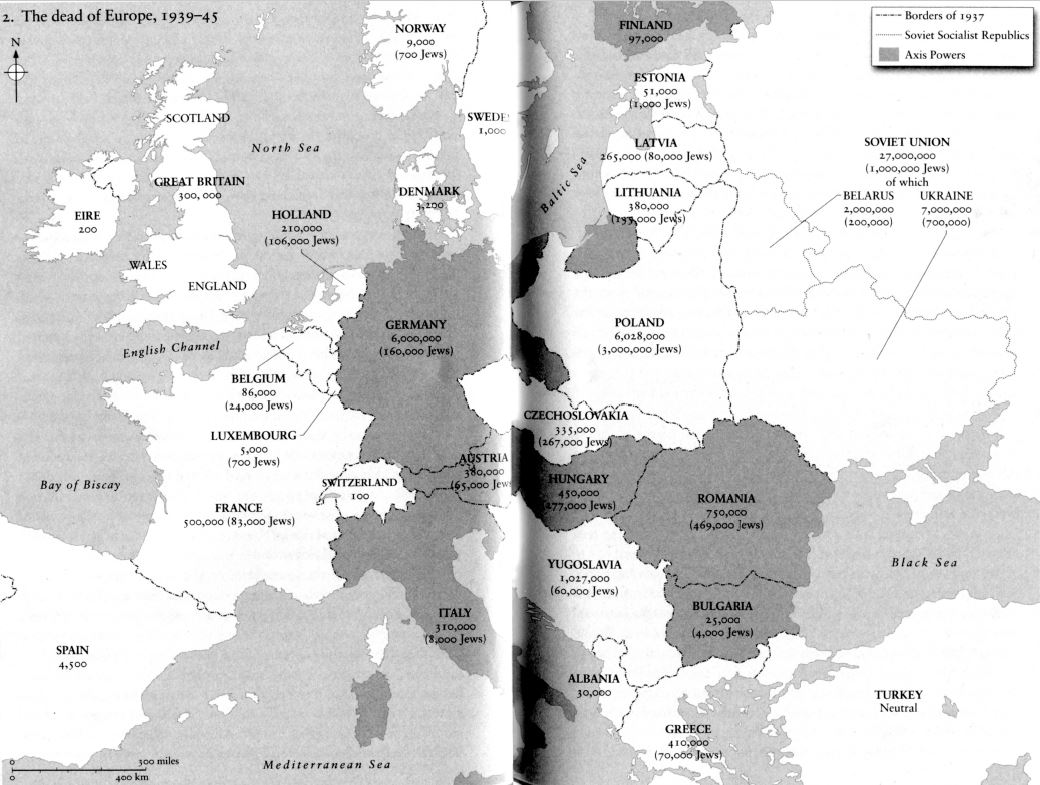
The UK has a particular weakness for this, with images of how the Dunkirk spirit, squadrons of spitfires and Churchill’s wartime speeches saved the day and led to victory over Nazi Germany. For some reason the historical ‘memory’ does not consider how it was that British deaths in the Second World War numbered only some 300,000, less than 1% of the population, compared to more than 25 million killed in the Soviet Union, 14% of its population. In the biggest confrontation with Germany that turned out to be the turning point for the whole war – the Battle of Stalingrad from August 1942 to February 1943 – the Soviet Union suffered nearly 500,000 killed or missing.

The main course

A record of how many people died in a long and extensive war is difficult to pin down with any precision, but the following map gives an interesting picture of the order of magnitude for different European countries in the 1939-1945 period. Brackets below the totals for each country show another chilling statistic for the murders of Jewish people. The bulk of the figures are from Germany, Austria, Central and Eastern Europe and the Soviet Union, but it is also worth comparing the absolute numbers with the sizes of the relevant populations to get an idea of the scale of the human destruction. While Poland’s number is large in both absolute and relative terms, six million dead (of which three million Jews) and around 17% of the population, Latvia’s and Lithuania’s figures are much smaller but still more than 12% of their populations. A Wikipedia tabulation here gives a fuller record.[1]

The dessert

With its topic being World War Two, the previously cited Wikipedia article and tables do not spell out that the human carnage in Europe continued until well after 1945. That is the focus of a book by Keith Lowe, from which the European map is taken: Savage Continent: Europe in the Aftermath of World War II (Penguin/Viking, 2004). To read Lowe’s review of post-war Europe is shocking, even if one first allows for the fact that it is unlikely that violence completely stops when formal hostilities cease.
Among other things, Lowe’s book details the continued attacks on Jewish people from 1944-45, especially in Central and Eastern Europe. Discussing the anti-Semitism and pogroms in Poland, he notes that
‘Poland was easily the most dangerous country for Jews after the war. At least 500 Jews were murdered by Poles between the German surrender and the summer of 1946, and most historians put the figure at around 1,500.’
It was not only murder, but also looting and theft:
‘In Hungary many peasants came into possession of decent clothes and footwear for the first time when the property of expelled Jews was shared out in 1944. In Poland, where the Jews had made up a substantial portion of the middle class, a new, Polish middle class rose to take their place.’
As you might imagine, any Jewish people returning home did not have much success in getting compensation.
But don’t think the violence was limited to anti-Semitism. The immediate post-war years had to deal with the aftermath of the destruction, with famine and millions of ‘displaced persons’ across the continent. Although some former collaborators with the German occupation found a way into the post-war establishment, they also risked humiliation or summary execution. Under the cover of revenge by resistance fighters, personal scores were settled. More importantly, there was a dramatic trend of ‘ethnic cleansing’ in the immediate post-war years.
In terms of numbers, the most striking development was the expulsion of over 11 million Germans from countries in Central and Eastern Europe. These were the so-called Volksdeutsch, the long-established populations of expatriate German speakers. Many also suffered forced labour in camps in Poland and Czechoslovakia.
Often the attacks on different groups were linked to their supposed role in the war. But the motive of revenge easily came to embrace all those in the ‘wrong’ community. Referring to developments in 1944-46, Lowe notes the tens of thousands killed in Poland and the Ukraine: ‘Poles and Ukrainians slaughtered one another and burned each other’s villages with an enthusiasm that far exceeded any of their actions against the German or Soviet occupiers’.
There was an attempted genocide of Serbs in Croatia, and Hungarians were expelled from Slovakia. Summing up on the Central and Eastern Europe dimensions, Lowe puts it like this:
‘These were the kinds of actions that were taking place all across Europe. Hungarians were also expelled from Romania, and vice versa. Albanian Chams were expelled from Greece; Romanians were expelled from Ukraine; Italians were expelled from Yugoslavia. A quarter of a million Finns were forced to leave western Karelia when the area was finally ceded to the Soviet Union at the end of the war. As late as 1950 Bulgaria began expelling some 140,000 Turks and Gypsies across their border with Turkey. And so the list goes on.’
‘As a result of all this forced population movement, Eastern Europe became far less multicultural than it had been at any time in modern history. In the space of only one or two years, the proportion of national minorities more than halved. Gone were the old imperial melting pots where Jews, Germans, Magyars, Slavs and dozens of other races and nationalities intermarried, squabbled and rubbed along together as best they could. In their place was a collection of mono-cultural nation-states, whose populations were more or less ethnically homogeneous.’
These events, barely 70 years ago, are something to consider when you observe the reactionary developments in European politics today.

Tony Norfield, 2 October 2018


[1] The Wikipedia article lists casualties from a wide range of countries, not just in Europe. Notable is the huge number of deaths in China, some 15-20 million and 3-4% of the population. China is little covered in films and books on the Second World War, but a good source is Rana Mitter’s Forgotten Ally: China’s World War II, 1937-1945, First Mariner Books, 2013.

Wednesday, 29 August 2018

Another Day Older and Deeper in Debt …


The question of debt is often absent from media coverage of the progress, or not, of the world economy. But a troubling problem is that debts have continued to rise since the 2007-08 crisis. Compared to the size of the economy, the total outstanding debt of the non-financial sector rose from just over 200% of GDP at the end of 2008 to over 244% at the end of 2017, with a 10 percentage point jump in 2017 alone.[1] Given that world economic growth remains weak, this is not likely to be a sign that optimism about future prospects has led to more borrowing for investment and consumption. Some recovery was likely once the banking system had been stabilised, but the latest numbers are the highest on record.
High debt is a dull, but debilitating burden for corporations, consumers and governments who have built up their borrowing. But this liability is also an asset for those who have lent their money or bought the debt securities. The latter include not only banks, but directly or indirectly, many corporations and consumers, especially the rich and those whose pensions and other income relies on interest and debt repayments. So the debt cannot just be wished away with no consequence. For example, even if banks wrote off the debts owed to them, this would damage their finances and risk insolvency, with further repercussions throughout the financial system, as became clear in the wake of the 2007-08 crisis.

Data details

The latest data from the Bank for International Settlements show a worse picture for global debt than indicated in a note I made on this blog a few months ago (see also the article with country details two years ago). As remarked before, the burden of debt will increase not only with its level – indicating how much has to be repaid eventually – but also with any extra funding cost that comes from higher interest rates.
On the latest data, both the ‘advanced’ countries and the ‘emerging market’ countries as a group showed a rise of debt compared to GDP in recent years. The rise in emerging market debt was from a much lower base, but much more rapid. Pictures for different countries are mixed, however.
Among the advanced countries, debt ratios stabilised in the US, though they have remained at a high 250% of GDP. They have fallen in Germany to around 175%, down from near 200% in 2010. In France, debt ratios have now risen to just over 300% of GDP; Japan remains the basket case, with a rate rising to 373%.

In emerging market countries, for many the debt ratio has stabilised in the past year or two. China’s rose strongly in the previous decade to just over 250% of GDP, but may have now flattened out. Similarly for South Korea, which now has a debt ratio of around 230%. Brazil’s debt ratio is lower and has steadied at around 150%. India’s is lower still, and has been flat at close to 125% of GDP.

Tony Norfield, 29 August 2018


[1] The figures are for the more than 45 areas reporting to the Bank for International Settlements, a group that includes all the major ‘G10’ countries and also the principal ‘emerging market’ countries such as China, Brazil, India, Russia, Korea, Indonesia, Philippines and Turkey.

Wednesday, 22 August 2018

Jews, Zionism and Israel


The reason behind the turmoil in the British Labour Party about anti-Semitism is not any actual anti-Semitism among party members. Instead, the turmoil is largely promoted by supporters of Israel who have worries about Jeremy Corbyn, and it is joined by other Corbyn opponents. Here is a leader of a major British political party who supports (some) Palestinian rights and who has dared to criticise the Israeli government for oppressing them. Given that the Labour Party has traditionally been the major pro-Israel force in British politics, one can see why the pro-Israelis have been apoplectic. Issues brought out by this episode (‘series’?) lead me to examine the relationship between being Jewish, Zionism and Israel.


Religion and ethnicity

Judaism is an unusual religion in having an ethnic, or genealogical dimension of how a ‘Jewish’ person is defined, rather than focusing only upon religious affiliation. Religion is commonly a social-political marker, not an ethnic one, although often people follow the religious label, if not the religious practice, of their parents or of the community in which they live. In the cases of Christianity and Islam, anyone who decides to follow the relevant beliefs can become a Christian (Catholic, Protestant, etc) or a Muslim (Sunni, Shia, etc), once they have gone through certain rituals. But it is a more protracted process to become Jewish, and is often bound up with whether one’s mother is also determined as being Jewish. If the mother is not, that does not bar the son or daughter from becoming Jewish. But if the mother is already considered to be Jewish, then automatically her son or daughter is so too, even if that person does not practice Judaism. For example, it is possible to be a ‘Jewish atheist’. The line only seems to be drawn against those who openly practise another religion, who thereby are no longer defined as being Jews.
This genealogical factor is reflected in Israel’s infamous 1950 Law of Return, whereby it is possible for all Jews, both ‘ethnic’ and religious, to go to Israel and gain citizenship. As a 1970 amendment to the Law defines it: ‘For the purposes of this Law, “Jew” means a person who was born of a Jewish mother or has become converted to Judaism and who is not a member of another religion’. That amendment also added in the ‘grandchild of a Jew, the spouse of a Jew, the spouse of a child of a Jew and the spouse of a grandchild of a Jew’ for good measure.
Although the genealogical criterion of Judaism is not the same as a purely ethnic definition of ‘Jewishness’, it is something that fits very well with the Zionist political objective of identifying Israel as the ‘homeland of the Jews’, one from which they had supposedly been cast out some two thousand years before. There are many ironies and contradictions in this, not least that early Zionism was mainly atheistic and had been in conflict with Orthodox Judaism. David Ben-Gurion, a future founder of the state of Israel, was also not religious and did not believe in the ‘exile’ story – though by 1948 he had abandoned this view.[1] To add to the mix, one should also note that some branches of Judaism reject the establishment of an Israeli state before the coming of the Messiah, while some Christian Zionists see the ‘ingathering of the exiles’ as a precursor to the Second Coming of Jesus!

Zionist mythology

There is no evidence for any mass expulsion of the inhabitants of ancient Israel, by the Romans or by anyone else. But an ethnic definition of Jewishness seems to have taken root among Zionists who were heavily influenced by the blood and soil racism of 19th century Europe, and who looked to define an ethnic people for their corresponding ‘national home’. (That the Zionists were responding to anti-Semitism and pogroms, especially in Eastern Europe, does not excuse their reactionary views.) Studies showing close links between the DNA of many different groups originating in the Middle East, Jewish and non-Jewish, undermine the notion of a specific Jewish people. Judaism has also long been a proselytising religion, converting people in Europe, Asia and Africa, an inconvenient fact covered up by the story of an ethnic group that must ‘return’ to its lost land.
But let us suppose for a moment that this Zionist mythology were true. Let us imagine, for example, that all the Jewish settlers in Palestine who come from the US, from Poland, from Russia or wherever could claim to trace their bloodlines back to King David. Would this have any bearing on how to assess the state of Israel? It is no justification at all for the expulsion of Palestinians and the seizure of their land after the 1947 UN Plan of Partition or in the 1948 war – in which over 700,000 Palestinians were expelled – or in the subsequent years. Just imagine being kicked out of your home because somebody shows up and claims that their ancestors lived there more than a thousand years ago! Of course, Jewish settlers in Palestine do not need to make this absurd claim; they can just rely upon the power of the Israeli state to drive out, kill or marginalise non-Jews.

Jews, the Holocaust and Israel

Many people who identify themselves as being culturally or religiously Jewish may not support political Zionism. To be more specific, they may not support political organisations and parties labelled Zionist, and especially not the right-wing parties that now dominate Israeli politics. But how many do not support the state of Israel, or do not see it as a necessary haven just in case there is a resumption of murderous anti-Semitism seen in Europe from the early 1930s and in the Holocaust? Those events turned even some prominent socialists and anti-Zionists into supporters of Israel.
The problem with this view is that it takes the crimes of Europeans and asks, even demands, that the Palestinians pay for them! Somehow, the slaughter of Jewish people by Europeans is seen to justify the dispossession of Palestinians from their land. This foundation stone of the state of Israel in 1948 is commonly ignored in public debate. At most, concerns are raised only about the subsequent outrageous injustices and land grabbing of the Israeli regime.
To understand the establishment of the state of Israel one needs to examine imperialist politics, not the Old Testament of the Bible or Hebrew scriptures. Important issues were not so much the efforts of Zionists to designate Palestine as the rightful homeland of ‘the Jews’. More significant were the rabid nationalism that swept Germany in the wake of the post-1918 international treaties that had impoverished and humiliated it, and the more general conditions of the time that had promoted fascism. Attacks on Jewish communities were rife, not only in Germany, and major countries like the US and the UK had also taken steps in their immigration laws to restrict the influx of Jewish, and other, refugees. In that context, the Zionist choice of Palestine as a destination became an attractive option by the time of the post-World War Two deliberations among the major powers.

Imperialist politics

The Balfour Declaration of 1917 that the British ‘Government view with favour the establishment in Palestine of a national home for the Jewish people’ is widely seen as the beginning of the process to establish the Israeli state. But while it was the first major concession to Zionist opinion by a big power, its main aim was to build support for Britain’s war effort, both in Europe and the US. It was a deceitful document, pretending also to be concerned with the rights of other communities in Palestine, and it was not seen by the British then as a definite commitment that they could or would need to implement in the future. Above all, the Balfour Declaration was an expression of imperial arrogance, relating to a land that the British had not yet even taken from the Ottomans. However, this seizure was later endorsed by the League of Nations, and the British Mandate for Palestine included the terms of the Balfour Declaration.
In the event, British policy was not especially pro-Zionist in the thirty years after the Balfour Declaration. This was both because there were different factions in the British ruling elite and because its policy was mainly concerned not to ruin important relationships with Arab countries – for example, the UK abstained in the vote on the 1947 UN Plan of Partition. Although the British put down Arab rebellions in Palestine and British military and police commanders usually supported the Zionists, they also limited the immigration of Jewish refugees from Europe into Palestine. Zionist leaders continued to press their case with the British, but this did not stop their terror attacks on the British in Palestine – notably the King David Hotel bombing in 1946. They also moved to do deals with the French, who, rivals with the British for control of the Middle East, provided Zionist militias with military aid with which to oppose British control.
Zionist leaders were fully aware of the precarious position they would find themselves in with their plans to steal Palestinian land. That problem was to be overcome by a deal with one or more of the major powers. The early, but only partial success was with the Balfour Declaration, with some British statesmen seeing the future Israel as a ‘little loyal Jewish Ulster in a sea of potentially hostile Arabism’, so they were open to such deals. Later, the French would also cooperate with any local force to combat Arab nationalism opposed to its colonial rule in the region. The culmination of these views resulted in the British-French-Israeli plot against Egypt’s Nasser in the 1956 Suez crisis. But when that failed, and the British and French were revealed as second rate powers, the Zionists turned more fully towards cooperation with the US, which was growing concerned about how to control the Middle East.
These days, Israel’s US connection is paramount, exemplified by US support in terms of military supplies, of US vetoes at the UN of any resolution criticising Israel and by the billions of dollars of US government aid and private contributions every year. However, support from European powers is also important for Israel. Europe is sometimes more critical of Israel, but offers special trade deals and, highlighting the contradictions of the ‘Jewish homeland’ supporters, allows Israel to take part in the Eurovision Song Contest and to be affiliated with UEFA, the Union of European Football Associations!

Too much trouble?

Israel was established as a tool for imperialism. It remains one today, but in recent years Israel has become more of an embarrassment than an unquestioned asset. It is a ‘country’ that cannot define its borders, because it always wants to seize more land; a ‘democracy’ that oppresses a large proportion of its citizens on ethno-religious grounds, with discriminatory laws, checkpoints, police brutality and murder; a racist, gangster state that repeatedly threatens destabilising military action in the Middle East and steps beyond its boundaries by interfering in major power politics. Israel has another problem too: recollections of the Holocaust that in past decades had given it so much unquestioned support are fading as a political force. Despite the efforts of pro-Israel lobbies to talk up the threat of anti-Semitism today, and despite the continued acquiescence of mainstream media in covering up its crimes, the foundational non sequitur, Europeans kill, so Palestinians must pay, is no longer enough completely to silence liberal concern about the massacres in Gaza and to prevent questions being raised about the nature of the Israeli state.

Tony Norfield, 22 August 2018


[1] On these topics, I would recommend the book by Shlomo Sand, The Invention of the Jewish People, Verso, 2009, and also Sand’s more recent article in the Israeli newspaper Haaretz, ‘How Israel Went From Atheist Zionism to Jewish State’, 21 January 2017.

Tuesday, 24 July 2018

Indian Boots on the Ground


Britain’s exploitation of India up to Partition and ‘independence’ in 1947 went much further than extracting investment and trading revenues and dominating its economy. Just consider the British Indian Army, established under British government control in 1858 after it took over from the East India Company. Manned by colonial Indian subjects, this force was critical for British imperialism’s many battles. In wars large and small, especially those outside Europe, against national liberation movements, uncooperative populations and rival powers, Indian troops greatly boosted the numbers of those who would fight and die for it.[1]
Prior to 1914, British armed forces had largely been used to police the Empire. Since Napoleon early in the 19th century and the Crimean War with Russia in mid-century, there had been little or no direct conflict with other major powers. British policy was to depend upon alliances with others, rather than to maintain a large standing army itself. So it was important to be able to draw upon a force of colonial troops when needed, including for the policing of the British Raj.
Important though they were for British power, Indian troops commonly faced racial discrimination, were looked down upon by white officers and were often used as cannon fodder, while also being given worse grade arms and equipment than regular British troops. Attractive as a cheap military resource for the Brits, these men could nevertheless see enlistment in the army as a reasonable option. There was regular pay and regular food, something not always available in the Indian economy dominated by British Empire interests – as became brutally clear with the Bengal famine in 1943.

Extra battalions

At the start of World War One in 1914, British army regular forces numbered less than 250,000, but they had grown to 3.8 million by 1918, including reserves, helped by conscription after volunteers proved insufficient. Over the same period, the British Indian Army grew from around 150,000 to more than one million, of which some 700,000 served overseas, making it a valuable additional force. This latter army fought in Ypres, Loos, Neuve Chapelle and Gallipoli, and in Mesopotamia (roughly corresponding to Iraq today), Palestine, Egypt and East Africa.
Although troop numbers fell back in the 1920s and 1930s, the Second World War and its aftermath saw a further utilisation of Britain’s Indian Army. Battle locations during the war included in North Africa (Tunisia, Libya and Egypt) and Europe (Italy, especially). A good book on this period notes that, in early 1942, “264,000 Indian troops were serving overseas, including 91,000 in Iraq, 20,000 in the Middle East, 56,000 in Malaya and 20,000 in Burma.”[2] By later that year, the Indian army had recruited another 600,000 men, and by the end of 1942 it stood at almost 1.55 million. Another 280,000 were recruited in 1943. By 1945, it had grown to some 2.5 million. This compared to 3.5 million in the British army you will more commonly read about.
Indian troops were, of course, used by the British to push back Japan’s wartime incursions into India itself. But the downside for the Brits in the early 1940s was that many Indian prisoners of war (held by the Axis powers) were ready to switch sides and join versions of the anti-colonial Indian National Army. Japan, in particular, made efforts to attract these forces.
Ahead of India’s independence, the Brits had to be a little cautious, but that did not prevent them from using Indian troops to help put down anti-colonial movements in Malaya, Vietnam and Indonesia. These were efforts by the much-lauded ‘socialist’ Labour Government to restore not just the British, but also the French and the Dutch to their former status. To add to the outrage, Britain also used just-defeated Japanese troops for the same purpose!
Despite demobilisation after 1945, by April 1946, “the Indian army still had two brigades in the Middle East; four divisions in Burma; three divisions in Malaya; four divisions in Indonesia; one division in Borneo and Siam (Thailand); a brigade in Hong Kong; and two brigades in Japan.” A division comprised roughly 10-15,000 men, and a brigade roughly 1,500-3,500 men.
Oh well, that’s enough about soldiers.

Tony Norfield, 24 July 2018


[1] The points below focus on Indian troops, but one should note that the British also used African troops and Chinese labourers in their war efforts. France also made great use of its African colonies. A good book detailing these points for the First World War is David Olusoga’s The World’s War: Forgotten Soldiers of Empire, Head of Zeus, 2014.
[2] This, the later quotation, and most of the information on Indian troop numbers, are taken from Srinath Raghavan, India’s War: the Making of Modern South Asia, 1939-1945, Penguin, 2017. For the post-1945 period, also see Christopher Bayley and Tim Harper, Forgotten Wars: the End of Britain’s Asian Empire, Allen Lane, 2007. A good online source for the history is here.